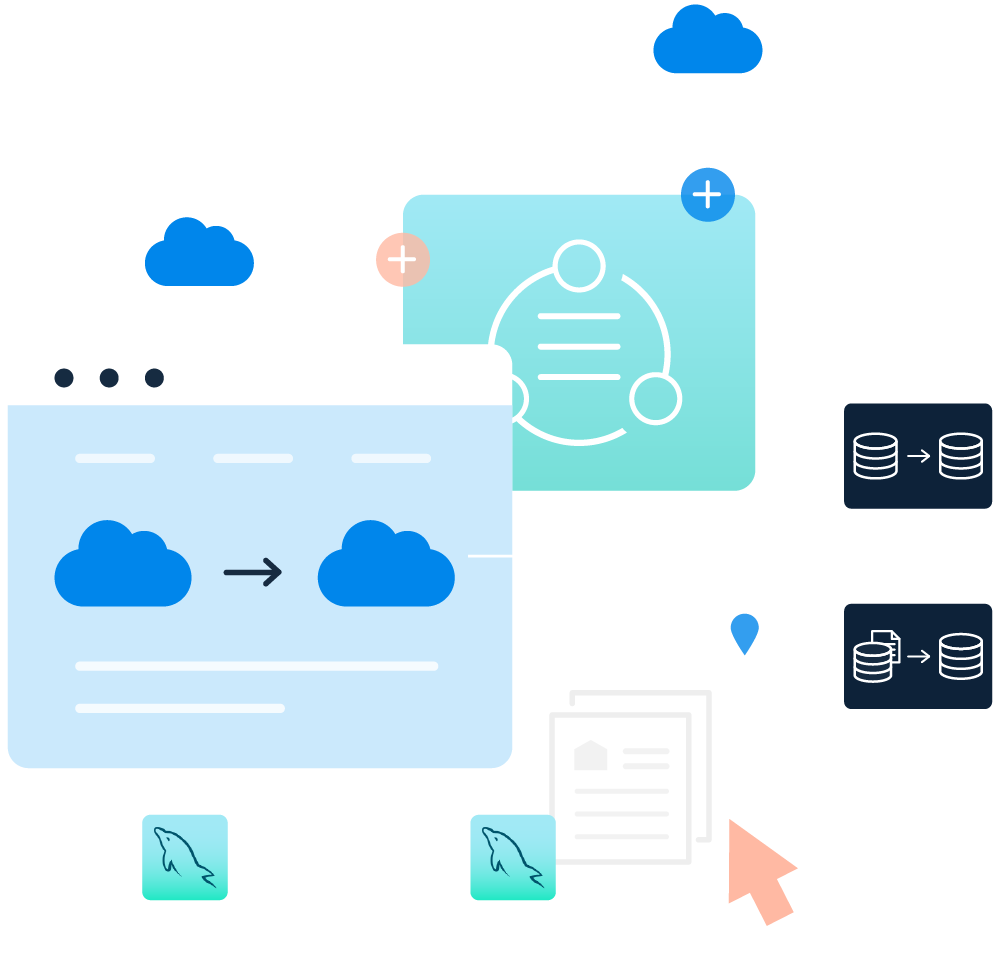

Support data sources across self-managed IDC environments, self-managed cloud environments, and cloud-managed database services to adapt to different deployment scenarios.

Provide end-to-end replication capabilities, from initial schema setup and full data migration to real-time change data replication. Support multiple replication architectures, including one-way and two-way synchronization.

Support secure connection methods including public network TLS, private network, and gateway-based connections to adapt to complex network environments and ensure secure data transmission.
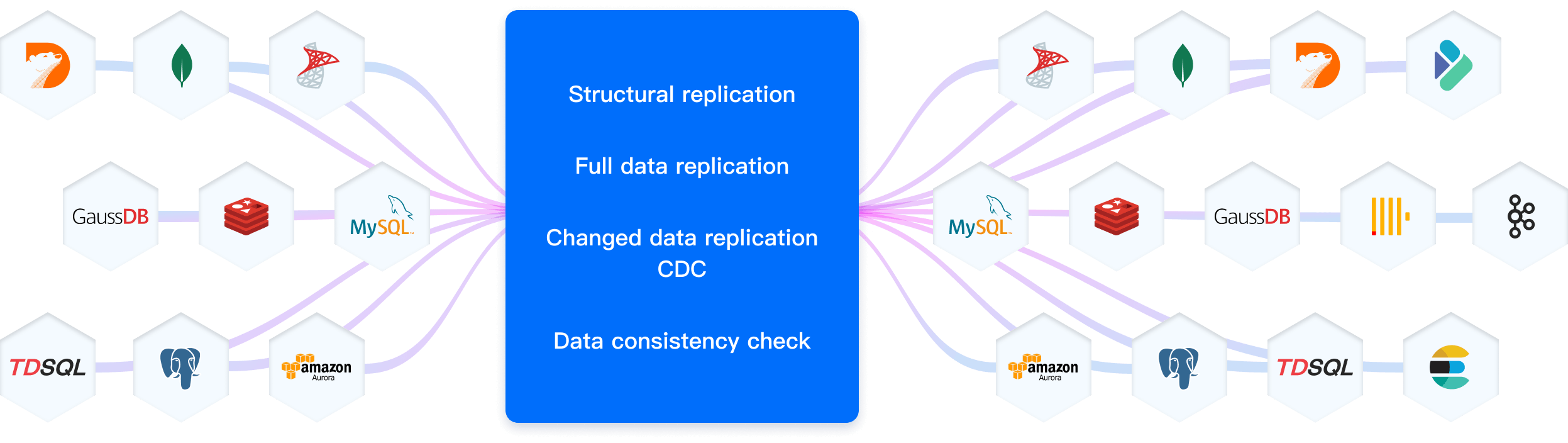


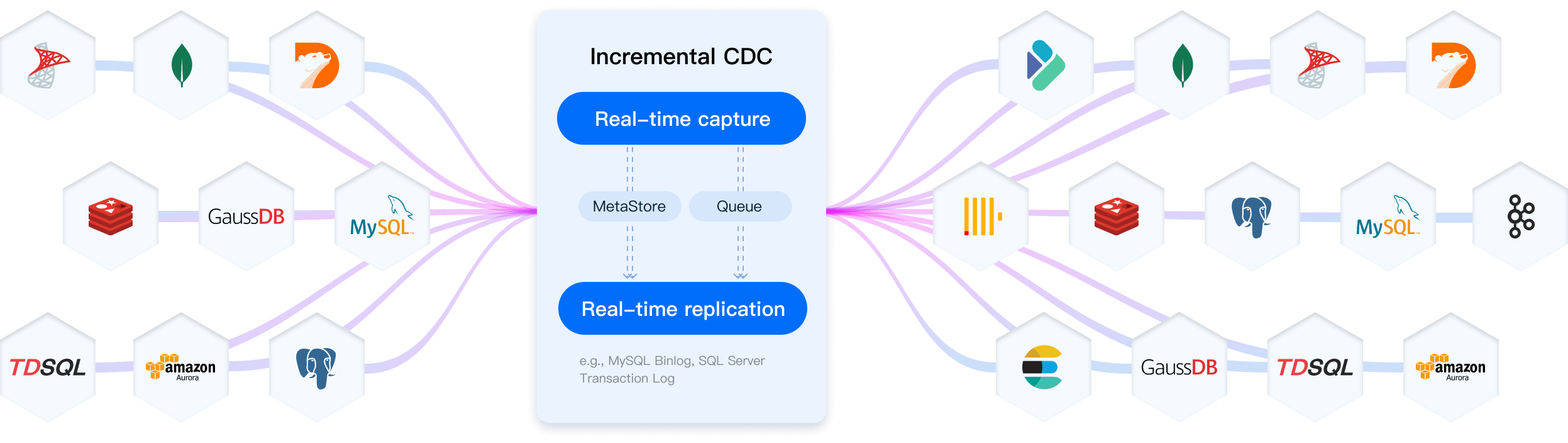

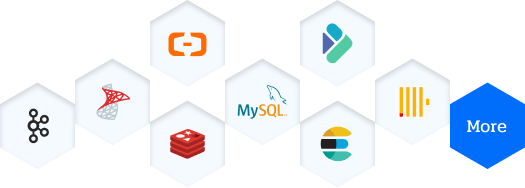




For scenarios including database migration to cloud, cross-cloud migration, cross-version upgrade, database scaling, and cross-environment data migration (e.g., migration from development environment to test environment), users expect live database migration without service interruption.
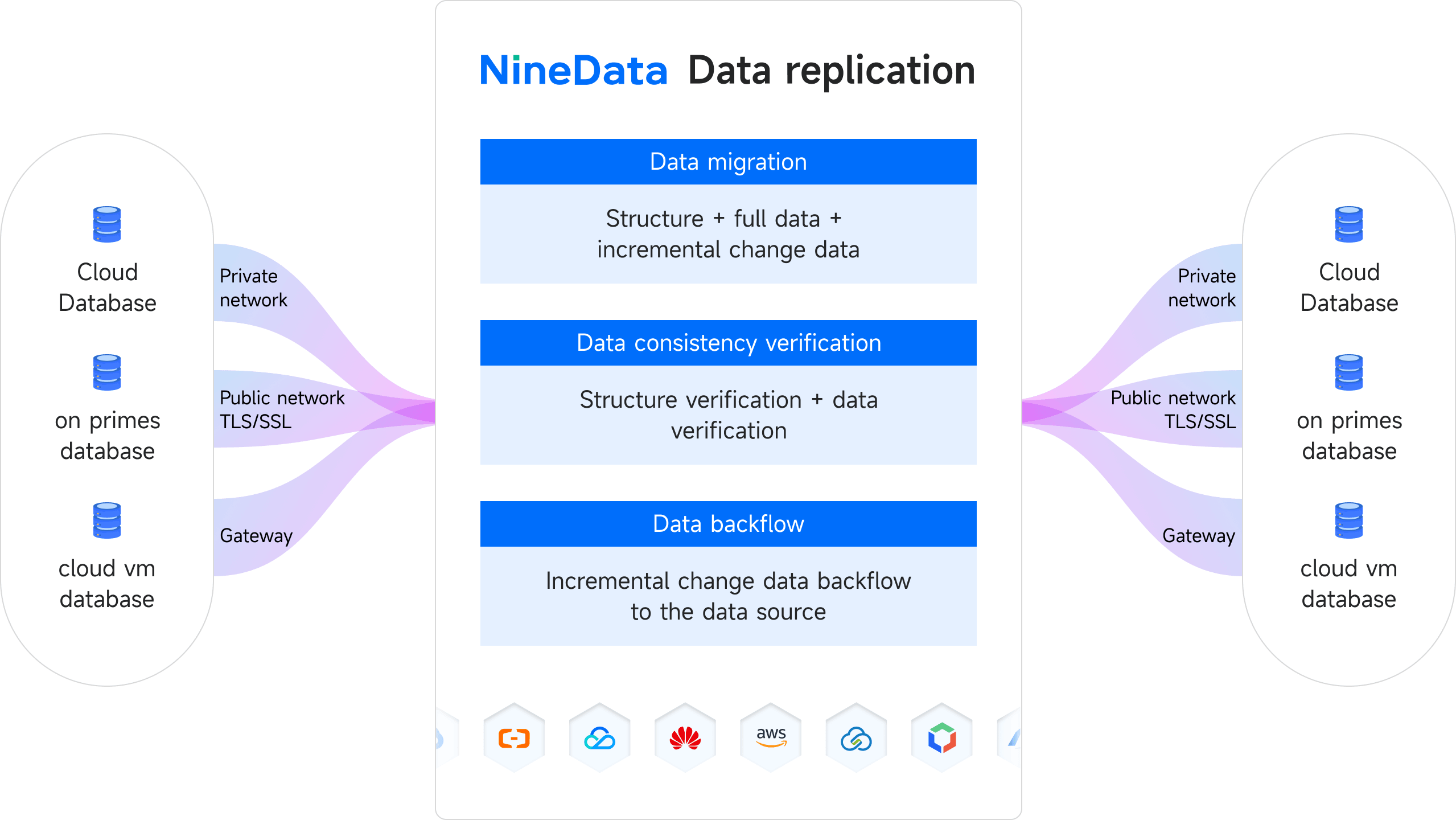

Support secure connection methods including public network TLS, private network, and gateway-based connections. Adapt to complex network environments while protecting data transmission.
Reduce migration downtime from hours or days to minutes. Business operations continue during migration.
Provide reverse synchronization and data consistency validation to quickly identify migration issues and enable rollback when needed.
For security compliance, data security and business availability requirements, enterprises intend to build remote disaster recovery centers across clouds, regions, IDCs and cloud platforms. Real-time replicated disaster recovery instances need to be created for core databases. If failures occur on primary databases, businesses can be seamlessly switched to disaster recovery instances to improve service availability.
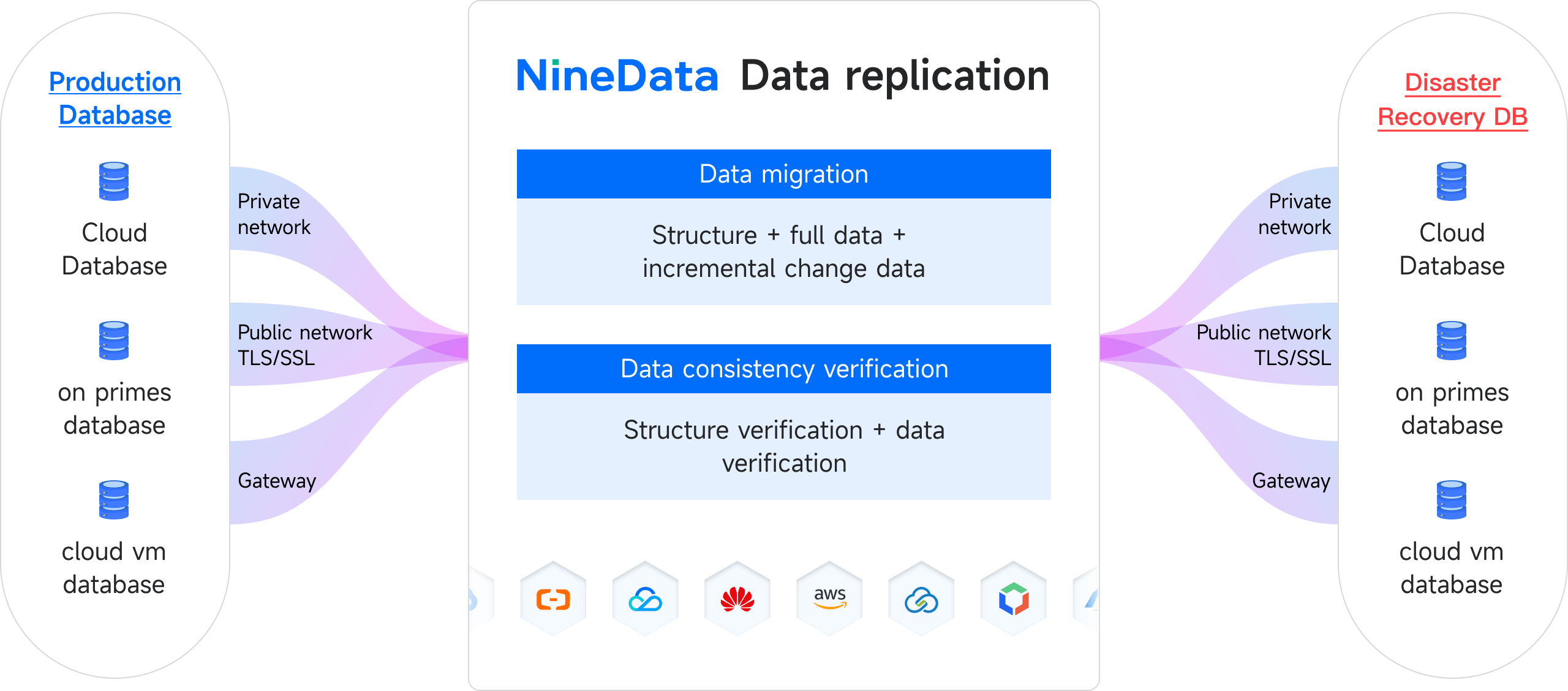
Maintain real-time replication between production and disaster recovery databases. When failures occur, services can be restored quickly with minimal business disruption.
High-performance long-distance data transfer and periodic consistency validation improve disaster recovery reliability.
Support secure connection methods including public network TLS, private network, and gateway-based connections to protect data transmission across complex environments.
Traditional database development workflows often require DBA or operations teams to review and approve production changes. As businesses scale, this process can become a bottleneck for faster delivery. Enterprises need a more efficient and collaborative development workflow.
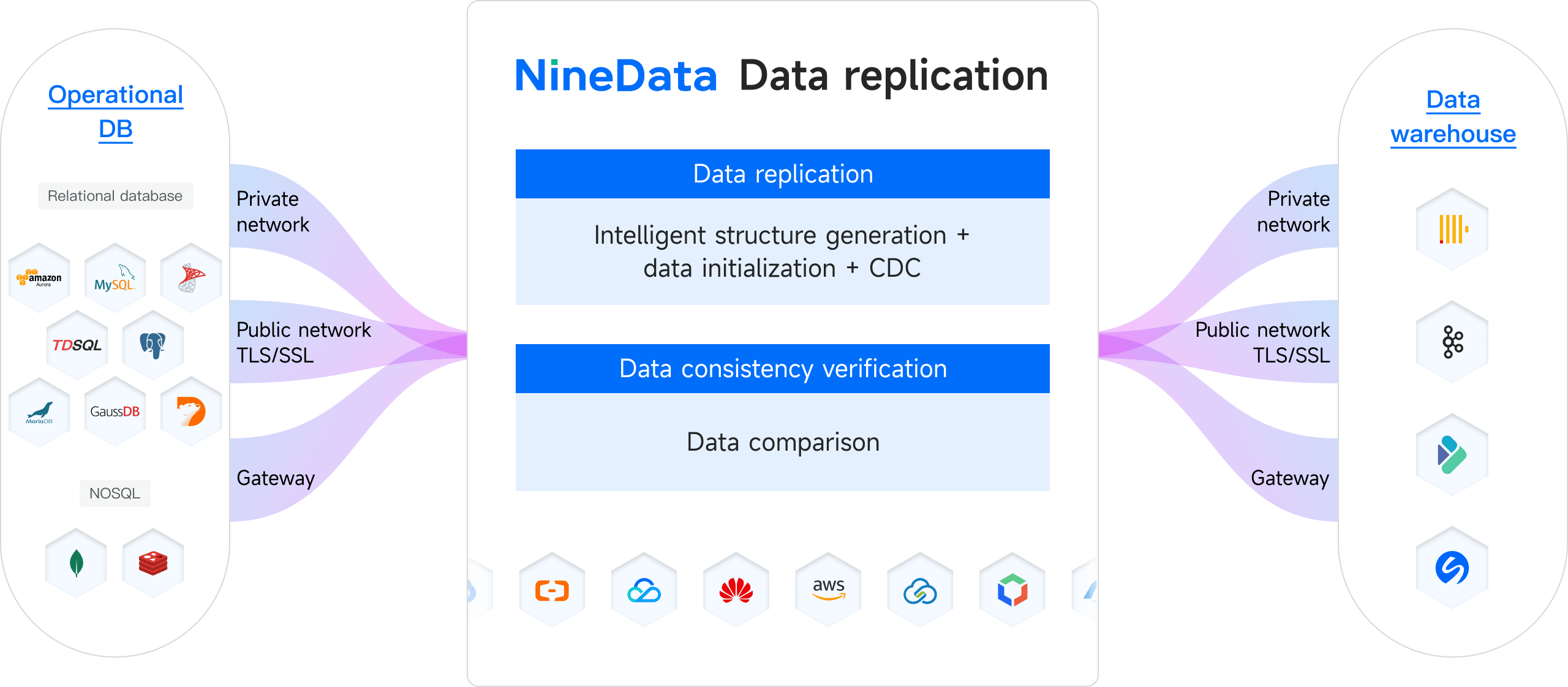
Capture data changes, detect schema changes, and adapt to downstream data warehouse requirements.
Capture business changes, detect schema changes, and adapt to downstream data warehouse requirements. Provide automated change handling and intervention capabilities to maintain stable data pipelines.

AWS FTR Certification
ISO 27001 Information Security Management System
ISO 27017 Cloud Security Management
ISO 9001 Quality Management System
ISO 20000 IT Service Management System

CMMI Level 3

Classified Protection Level 3 (China)

Alibaba Cloud Ecosystem Partnership

Tencent Cloud Ecosystem Partnership

Baidu Intelligent Cloud Partnership

Database DevOps & Replication for Humans and Al Agents

-logo.svg)